

14 Jan Making Tax Digital: What It Means for Your Business and How to Prepare
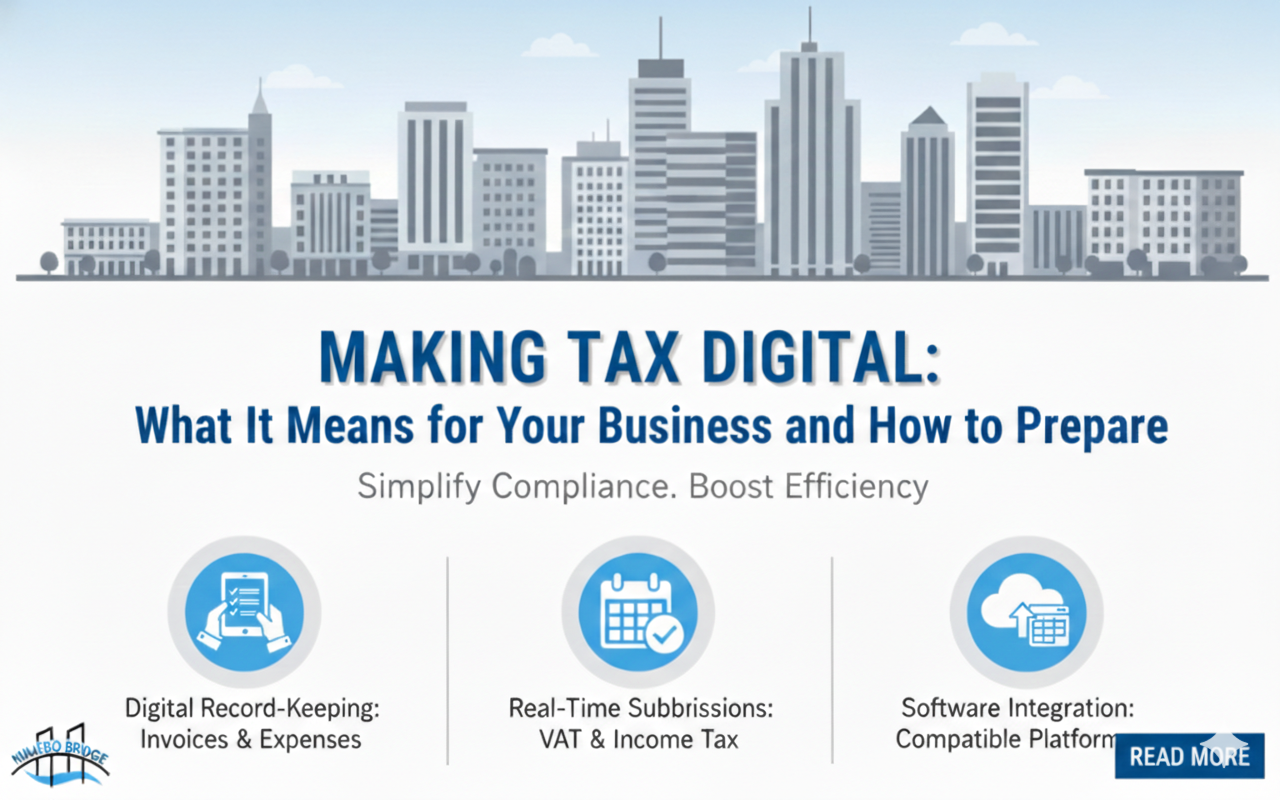
Making Tax Digital (MTD) is one of the biggest changes to the UK tax system in recent years. Introduced by HMRC to modernise tax reporting, MTD affects how businesses and individuals keep records, submit returns and manage their tax affairs. While the long-term aim is greater accuracy and efficiency, the short-term reality for many businesses is increased reporting frequency and administrative pressure.
At NumeroBridge, we help businesses understand what MTD means in practice and how to adapt without disruption.
What is Making Tax Digital?
Making Tax Digital requires businesses and landlords to:
-
Keep digital accounting records
-
Use HMRC-approved software
-
Submit tax information to HMRC more frequently
MTD is already in place for VAT-registered businesses, and it is being extended to Income Tax Self Assessment (MTD for ITSA) for sole traders and landlords earning over the HMRC threshold.
How MTD Will Affect Businesses and Individuals
More frequent reporting
Under MTD, annual tax returns are being replaced by quarterly submissions, followed by an end-of-period statement. This means:
-
More regular bookkeeping
-
Tighter deadlines
-
Less margin for error
For many businesses, this represents a significant shift from once-a-year compliance to ongoing reporting throughout the year.
Increased bookkeeping demands
MTD makes up-to-date bookkeeping essential. Businesses will need to:
-
Record transactions promptly
-
Reconcile accounts regularly
-
Maintain clean, accurate digital records
Poor or delayed bookkeeping can now quickly lead to reporting errors and penalties.
Why Bookkeeping Frequency Will Increase
With quarterly reporting requirements, businesses can no longer rely on annual or ad-hoc bookkeeping. Instead:
-
Bookkeeping will need to be monthly or even weekly
-
Financial data must be reviewed more frequently
-
Issues must be addressed in real time, not months later
This increased frequency helps avoid surprises but requires a more structured approach to financial management.
How to Handle the Changes Effectively
1. Move to cloud-based accounting software
Using MTD-compliant software allows seamless digital record-keeping and submission. It also improves visibility over cash flow and performance.
2. Adopt regular bookkeeping routines
Moving to monthly or weekly bookkeeping ensures records are accurate and submission-ready at all times.
3. Work with proactive accountants
MTD is not just a compliance exercise — it’s a shift in how businesses manage finances. A proactive accountant can:
-
Monitor reporting deadlines
-
Review submissions before they’re filed
-
Identify tax planning opportunities early
How NumeroBridge Supports Clients Through MTD
At NumeroBridge, we help businesses, franchisees and property owners:
-
Transition to MTD-compliant systems
-
Implement regular bookkeeping processes
-
Manage increased reporting frequency
-
Reduce administrative burden and risk
Rather than reacting to deadlines, we help clients plan ahead, stay compliant and use financial data to make better decisions.
Turning MTD into an Advantage
While Making Tax Digital increases reporting obligations, it also offers opportunities. Businesses with accurate, real-time financial information are better placed to:
-
Manage cash flow
-
Identify growth opportunities
-
Reduce tax surprises
-
Make confident strategic decisions
With the right systems and support in place, MTD doesn’t have to be a burden — it can become a valuable tool for better financial control.
Need help preparing for Making Tax Digital?
NumeroBridge provides expert guidance and hands-on support to help you navigate MTD with confidence.
📞 Book a consultation today to find out how we can help.