

07 Nov Cash Flow vs Profit: Why Profitable Businesses Still Struggle
One of the most common misconceptions in business is that profit equals success. In reality, many profitable businesses struggle — and even fail — because of poor cash flow management. Understanding the difference between profit and cash flow is essential for making sound commercial decisions.
At NumeroBridge, we regularly work with businesses that look healthy on paper but experience ongoing pressure in day-to-day operations. The reason is almost always the same: cash flow has not been planned, monitored or managed effectively.
What’s the Difference Between Profit and Cash Flow?
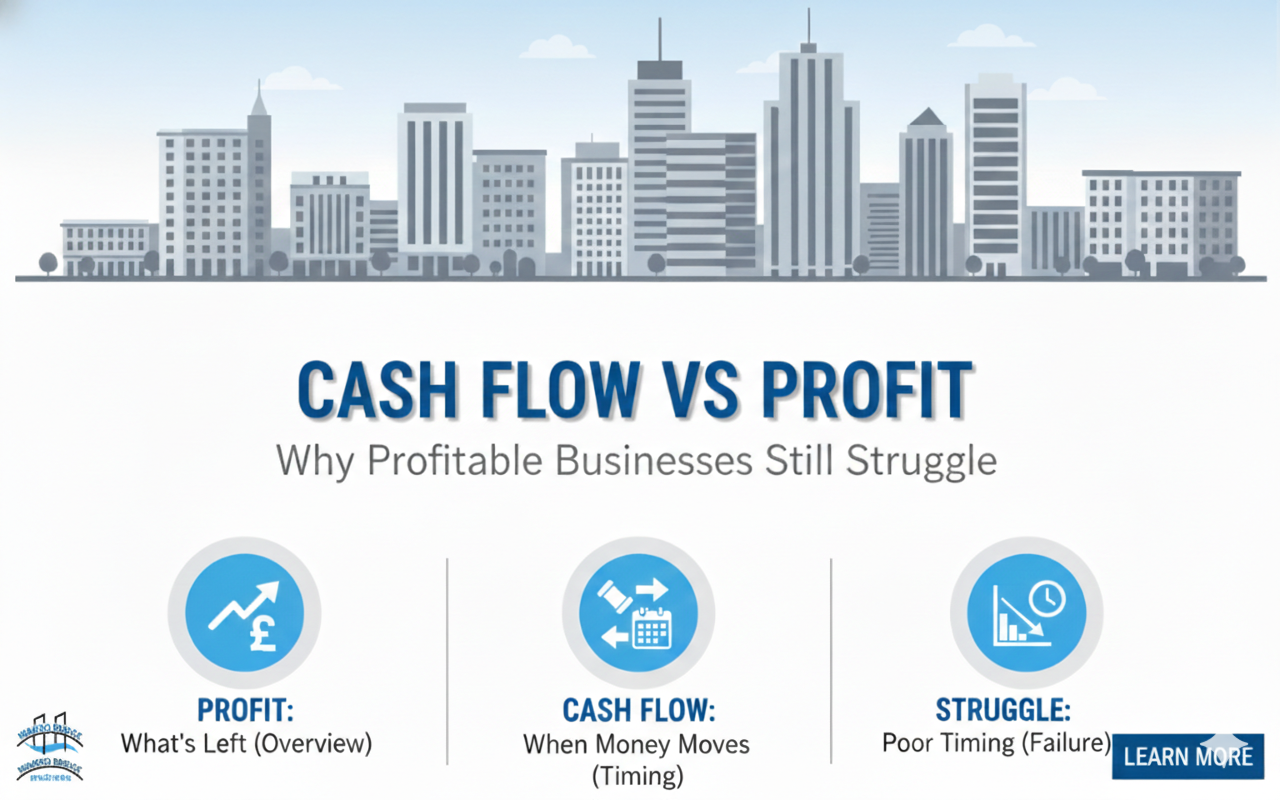
Profit is what remains after expenses are deducted from revenue. It’s usually reported annually or quarterly and gives an overview of business performance.
Cash flow, on the other hand, is about timing. It reflects when money actually enters and leaves your bank account. A business can be profitable but still run out of cash if income arrives later than expenses are due.
Common causes of cash flow problems include:
-
Late-paying customers
-
High upfront costs
-
Poor stock or project cost control
-
Rapid growth without sufficient funding
Why Cash Flow Matters More Than You Think
Cash flow affects every part of your business. Without it, you cannot pay staff, suppliers or lenders — regardless of how profitable your business appears.
For property professionals, cash flow is critical when managing mortgage payments, refurbishments, service charges and void periods. In franchising, poor cash flow planning can put pressure on both franchisors and franchisees, even when unit economics look strong.
Clear cash flow forecasting allows you to:
-
Anticipate shortfalls before they happen
-
Plan funding or refinancing early
-
Make confident growth decisions
-
Reduce financial stress
How Better Forecasting Changes Decision-Making
Cash flow forecasting is not about guesswork. It’s about understanding the timing of income and expenditure and testing different scenarios.
At NumeroBridge, we help clients model:
-
Best-case, realistic and worst-case outcomes
-
The financial impact of growth or expansion
-
Funding requirements and repayment capacity
-
Cost increases or delayed income
This clarity allows business owners to move from reactive decisions to proactive planning.
Practical Steps to Improve Cash Flow
While every business is different, a few practical steps can make a significant difference:
-
Invoice promptly and follow up consistently
-
Review payment terms with customers and suppliers
-
Understand true project or unit-level costs
-
Maintain a rolling cash flow forecast
-
Plan funding before it becomes urgent
Small improvements in cash flow management often deliver immediate results.
Building Financial Confidence
Strong businesses are built on clarity, not assumptions. Understanding your cash flow gives you control, reduces risk and allows you to focus on growth rather than firefighting.
NumeroBridge works closely with UK businesses, property professionals and franchise operators to build clear financial foundations and support confident decision-making.